

Video testimonials are simple in concept: you’re capturing a real customer talking about their experience working with you.
But their real value is what they solve.
Most businesses don’t struggle to explain what they do. They struggle to be believed.
That gap between what you say and what a buyer trusts is what slows decisions down.
Video testimonials help close that gap.
What a Video Testimonial Actually Is
A video testimonial is not a script, a review, or a promotional message. It’s a structured conversation.
The customer explains:
- what was happening before they worked with you
- why they chose you
- what the experience was like
- what changed as a result
Done well, it gives future buyers something they rarely get from marketing: a clear, relatable account of what working with you actually feels like.
The Trust Gap Most Businesses Face
Before a buyer moves forward, they’re asking a simple question:
“Is this actually going to work for me?”
Your website, sales deck, and messaging all try to answer that—but they come from you.
That creates a natural level of skepticism.
This is the trust gap:
- you say it works
- the buyer isn’t fully convinced yet
Video testimonials close that gap by shifting the message away from you and onto someone the buyer sees as more neutral—a customer who already took the risk.
Why Video Works Better Than Written Reviews
Written reviews can help, but they’re easy to skim past or question.
Video adds context that text can’t:
- tone of voice
- facial expressions
- level of conviction
That makes it easier for a viewer to decide if the story feels real.
And when something feels real, it becomes easier to trust.
Where Video Testimonials Help in Sales
Video testimonials are most effective at the exact moment a buyer is hesitating.
They help show:
- someone with a similar situation
- a clear before-and-after
- a real, specific outcome
Instead of explaining benefits again, your team can point to proof.
That often shortens the sales cycle and reduces back-and-forth.
What a Strong Testimonial Looks Like
The strongest testimonials are simple and easy to follow.
They typically sound like:
- “Here’s the problem we had”
- “Here’s what we tried before”
- “Here’s why we chose this company”
- “Here’s what changed after”
Clarity matters more than polish. If the story is easy to understand, it works.
Why Most Businesses Don’t Get Enough Testimonials
It’s usually not because customers are unwilling.
It’s because the process feels like effort.
If a customer has to:
- figure out what to say
- deal with scheduling friction
- worry about how they’ll come across
they’re more likely to delay or decline.
That’s where most testimonial efforts break down.
What Actually Gets Customers to Participate
The deciding factor is simplicity.
When the process is easy, customers are far more likely to say yes.
That means:
- flexible scheduling that fits their calendar
- a guided conversation so they don’t have to prepare
- a clear start and end (typically around 45 minutes)
If the customer had a good experience, willingness isn’t the issue. Friction is.
Why the Remote Model Matters
This is where most businesses underestimate the impact.
Remote recording removes the biggest barriers:
- no travel required
- no complex setup
- no disruption to the customer’s day
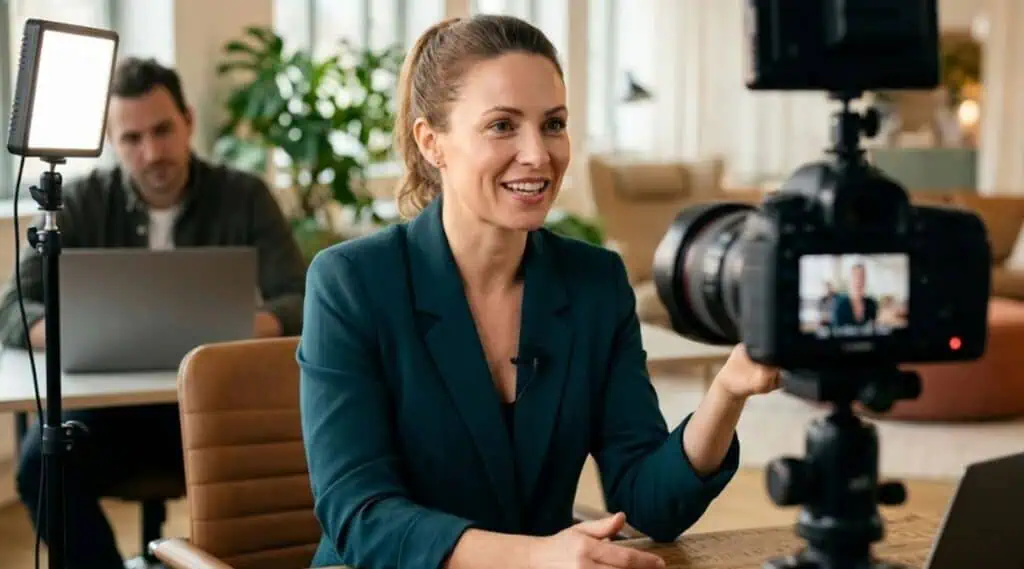
The customer joins from their own environment, is guided through the conversation, and finishes in one session.
That convenience is what makes testimonial collection scalable—not just possible.
Where Businesses Use Video Testimonials
Once recorded, testimonials can be used anywhere a buyer is evaluating your business:
- website pages
- sales presentations
- email follow-ups
- social content
In each case, they serve the same purpose: letting the buyer hear directly from someone who already made the decision.
Frequently Asked Questions
How long does the interview take?
Typically around 45 minutes.
Do customers need to prepare in advance?
No. The conversation is guided, so they simply respond based on their experience.
What’s the best way to increase participation?
Make the process easy. Flexible scheduling and a simple, guided format remove most resistance.
Conclusion
Video testimonials work because they solve a specific problem: trust.
They bridge the gap between what you say and what a buyer believes.
When the process is simple, remote, and guided, customers are far more likely to participate. And when they do, you end up with content that helps future buyers move forward with confidence.
Turn Customer Stories Into Sales Assets
If you’re relying on written reviews or inconsistent case studies, you’re likely leaving deals on the table.
A structured, remote testimonial system makes it easy for customers to participate and gives your team credible proof to use at every stage of the sales process.
If you want to see how this would work for your business, book a quick strategy call and we’ll walk you through exactly what it would look like.
